 Jaivik Tattoo
Ganesha tattoo designs and meaning
Ganesha is the remover of obstacles and the god invoked at the start of new work. Many people choose a Ganesha tattoo for a new beginning, for protection or as a family symbol. The designs below suit different sizes and styles.
What the details mean
The elephant head is read as wisdom and strength, the large ears as a sign of listening, and the small mouth as restraint in speech. The broken tusk recalls the story of the Mahabharata. The mouse he rides stands for the control of desire, and the modak is a sweet that stands for the reward of devotion.
Ideas to start from
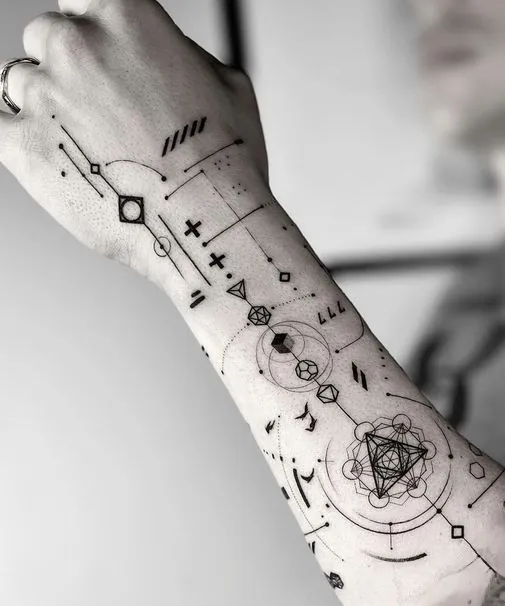
- Line art Ganesha
- A clean, continuous line drawing of the face, easy to place on the forearm or wrist.
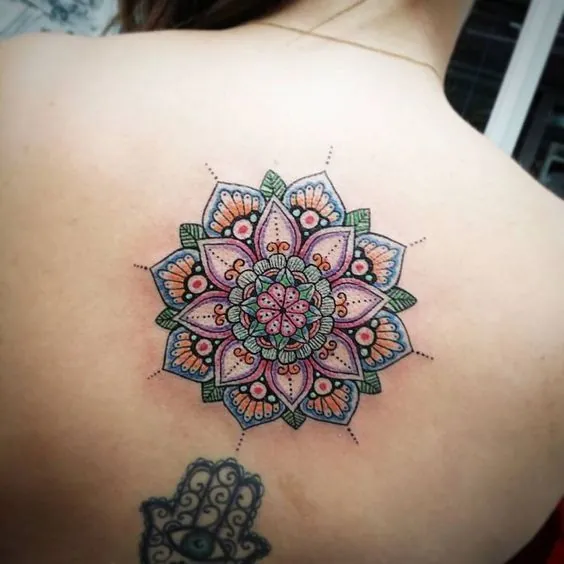
- Mandala Ganesha
- The figure inside a mandala, for the upper back, the shoulder or the thigh.
- Ganesha with modak and mouse
- A fuller figure with his familiar symbols, in colour or black and grey.
- A realistic portrait
- A detailed face with jewellery and the trunk, in realistic shading.
- Trunk and tusk only
- A minimal design that suggests the god with a few lines.
Styles that suit it
Where to place it
Many people place Ganesha above the waist, on the upper arm, the shoulder, the chest or the back. Small line art suits the forearm or the inner arm. A design in a mandala needs a wide, flat area such as the upper back.
From the studio
Healing and aftercare
Traditions differ on how Ganesha should be shown, so share any family or regional preferences with the artist. Photos of the form you have in mind help the most.
Read the full aftercare guide.
Questions people ask
What does a Ganesha tattoo mean?
It stands for new beginnings and the removal of obstacles, and it is also chosen for wisdom and good fortune.
Where should a Ganesha tattoo go?
Many people choose a place above the waist as a mark of respect, such as the arm, the chest or the back. It is a personal choice.
Can Ganesha be combined with a mandala?
Yes. It is a common pairing, and the circular frame also lets you add a lotus, an Om or other symbols.